
Elise Simmons, Undergraduate Researcher
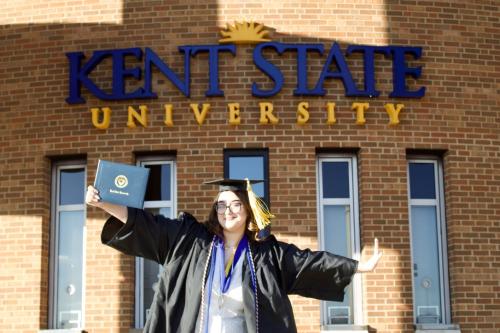
Elise Simmons is a senior psychology major with a minor in neuroscience. She is an undergraduate research assistant in Dr. Gilman鈥檚 Health & Behavioral Neuroscience Lab, where she studies how stress and high-salt diets may affect learning and memory in mice. Her work is part of a broader effort to understand how diet, stress, and biological responses interact with cognition.
Elise鈥檚 project examines a question that connects everyday life to neuroscience: how might something as common as salt intake influence more than physical health? While salt is already known for its connection to cardiovascular and metabolic health, Elise鈥檚 research asks whether high salt, especially when combined with stress, may also shape learning and memory.
The project responds to a gap in existing diet-and-cognition research. Many studies examine high-fat or high-sugar diets because those diets involve calories, while salt is often studied less in relation to cognition. Elise also noted that some salt-and-cognition studies have not included female mice, which can cause important sex differences to be missed.
During her time in the lab, Elise has helped collect several kinds of data, including food consumption, body weight, water consumption, behavioral data, and aldosterone levels from serum samples. The study compares mice on high-salt diets with mice on low-salt diets, allowing the team to examine whether salt intake produces measurable differences in behavior and biological outcomes.
Elise鈥檚 work in the lab varies from day to day. Some days, she records food intake and body weights, a process that can take anywhere from 15 minutes to more than an hour depending on the number of mice involved. On other days, she runs behavioral testing, which can take several hours. The mice complete five consecutive days of cognitive training and later complete three consecutive days of cognitive testing.
One important tool in the project is the Gemini Active and Passive Avoidance System. The system contains two chambers separated by a gate, allowing researchers to study learning and avoidance behavior in mice. Elise had to learn how to use this system, maintain diet manipulations, record and manage data, process blood, read scientific literature, and work with rodents according to IACUC protocols.
Although the study is still ongoing, Elise said one emerging surprise is that salt has not yet appeared to affect mouse avoidance behavior. The team originally expected that a high-salt diet might reduce long-term avoidance memory without affecting learning, based on findings from previous research. Because data collection is still continuing, Elise recognizes that the results may change as the project progresses.
Elise is mentored by Dr. Gilman, graduate students, and other undergraduate assistants in the lab. One of the most important lessons she has taken from this environment is that research is a constant learning process. As she explained, no one is 鈥渂orn knowing everything,鈥� and there is always something to learn from people at every level of education.
Elise has also developed as a research communicator. She has presented her work at the Undergraduate Research Symposium, the BHRI Summer Fellows Program capstone presentation, the SURE three-minute presentation, and the 2025 BHRI Neuroscience Symposium. Through these presentations, she learned that researchers cannot always predict what questions an audience will ask. She also learned that it is acceptable to admit uncertainty and offer an informed answer when possible, because science itself exists to investigate what is not yet fully known.
Her research experience has given her both technical and transferable skills. She has learned how to record weights, run behavioral tasks, maintain diet manipulations, transcribe and manage data, process blood samples, read scientific literature, and follow ethical research protocols for animal care. These experiences have helped her become more prepared for life after college and more confident about pursuing future career possibilities.
When asked what she would tell students who are nervous about starting research, Elise encourages them to give it a try. She began applying to labs as a second-year student after spending her first year as a non-science major. At the time, she said she knew very little, except that she wanted hands-on experience beyond classroom lectures. Nearly two years later, she is still part of the lab.
Elise believes one myth about undergraduate research is that students must already have extensive research experience or advanced coursework before joining a lab. For her, what matters most is a strong work ethic and a willingness to learn. 鈥淭he idea of all of this is to learn,鈥� she said.
If readers remember one thing from Elise鈥檚 story, it is that science always has room for more discovery. There are still many unanswered questions and gaps to fill. Through her research experience, Elise has not only contributed to a project on stress, salt, and cognition; she has also grown into a more confident student who understands that learning, uncertainty, and discovery are all part of the scientific process.
Written by Margaret Funmilayo Adie